
by Anahita Shelat, Founder & Creative Head | July 23, 2026 | 0 Comments
Contents
- 1 1. The Geometry of the Body: Why Standard Sizing Fails Indian Silhouettes
- 2 2. Bespoke Fit as the Ultimate Definition of Status
- 3 3. Inside the Atelier: The Anatomy of a Made-to-Measure Indian Fashion Consultation
- 4 4. Ateliers vs. Assembly Lines: Why Homegrown Labels Own Customization
- 5 5. Personalization as a Commitment to Made-to-Measure Indian Fashion Longevity
- 6 6. A Final Thought
- 7 Frequently Asked Questions
- 7.1 What is the difference between bespoke and made-to-measure Indian fashion?
- 7.2 Why does standardized sizing fail Indian body shapes?
- 7.3 How long does the made-to-measure Indian fashion process take?
- 7.4 Can custom tailored ethnic wear be adjusted if my size changes?
- 7.5 How does custom tailoring support sustainable fashion?
- 8 Leave a Reply
The definition of luxury within made-to-measure Indian fashion is undergoing a profound transformation, steering away from overt branding toward personalization. In a world saturated with factory-standard sizes, the modern consumer is rediscovering the elegance of custom-fit garments. True luxury is no longer defined by a label, but by how a piece aligns with the unique curves of the wearer.
For years, off-the-rack fashion dominated the retail landscape, offering speed at the expense of individuality. Today, style-conscious buyers are recognizing the compromises inherent in standardized sizing. They are looking for ethnic wear that feels personal, comfortable, and structurally harmonious.
By choosing made-to-measure Indian fashion, buyers are reclaiming their relationship with the tailors and designers who build garments by hand. This shift from standardized scaling to bespoke creation represents a return to our heritage. It honors both the structural complexity of our bodies and the slow, dedicated craftsmanship of traditional design.
In this changing landscape, the relationship between the wearer and the garment is redefined. We are no longer passive consumers of fashion; we become active participants in its creation. This collaborative process results in garments that carry personal stories and stand as testaments to individual style.
As we examine this shift, it becomes clear that customization is not a modern luxury invention. Rather, it is a return to the historic roots of Indian dress, where clothing was always draped, wrapped, and tailored to fit the individual body, celebrating unique proportions rather than industrial averages.
1. The Geometry of the Body: Why Standard Sizing Fails Indian Silhouettes
Generic sizing charts are built on Western body proportions, which rarely map accurately to the diverse silhouettes of Indian buyers. Ill-fitting shoulders, tight bustlines, and incorrect waist-to-hip ratios are common frustrations. Standardized retail systems treat bodies as flat grids, ignoring the natural three-dimensional depth of human anatomy, driving the demand for made-to-measure Indian fashion. According to recent Business of Fashion reports on global retail shift, customized tailoring represents the future of personal luxury.
When an ethnic garment fits poorly, it compromises both comfort and visual elegance. A custom fit, however, accommodates the unique proportions of each individual. It ensures that the shoulder seams sit precisely, the bust is comfortably supported, and the hem length is perfectly tailored to the wearer’s height.
This structural mismatch is driving a widespread return to made-to-measure Indian fashion as the only reliable solution. When a garment is tailored to individual measurements, it eliminates the need for awkward alterations. It allows the fabric to drape naturally, highlighting the wearer’s shape with grace and poise.
Standardization also ignores the variety of heights and limb lengths across different regions. A sleeve that fits one person might be too short for another, and a tunic length can look disproportionate depending on torso proportions. Bespoke tailoring addresses these minor variations with extreme care, ensuring balance and proportion.
By focusing on individual geometry, made-to-measure Indian fashion celebrates the body instead of forcing it to conform to industrial templates. It shifts the focus from finding a size to creating a fit, making the garment a true extension of the self.
The physical discomfort of standardized clothing goes beyond vanity. A collar that constricts the neck, armholes that pinch the skin, or a waist that binds during movement are constant irritants. These issues strip away the confidence that a luxury garment is supposed to instill in the wearer.
When we analyze the geometry of the body, we realize that no two individuals share the same posture or bone structure. One shoulder may be slightly higher, the back may curve differently, and weight is distributed in unique patterns. Standardized sizing is simply incapable of accommodating these natural variations.
Bespoke tailoring, on the other hand, respects these subtle differences. It approaches the body with a high degree of empathy and precision, creating a garment that moves in perfect synchronization with the wearer, accommodating every gesture and breath with ease.
2. Bespoke Fit as the Ultimate Definition of Status
In the contemporary luxury landscape, status is no longer communicated through loud logos or heavy, uncomfortable embellishments. Instead, a flawless, personalized fit has become the new marker of distinction, redefining the status of made-to-measure Indian fashion. While we previously discussed why quiet luxury Indian fashion is capturing the spotlight, this post explores the structural philosophy behind it. The modern heritage woman values the quiet confidence that comes from wearing a piece designed exclusively for her.
Loud designs often serve to cover poor fabric quality or structural shortcuts. When a garment is stripped of excessive decoration, the precision of the construction becomes the main narrative. Every seam, dart, and drape must be executed with absolute accuracy to maintain the integrity of the design.
This quiet aesthetic is heavily dependent on the principles of made-to-measure Indian fashion for its impact. Without a custom fit, minimal designs can look sloppy or unstructured. The clean lines of a contemporary tunic or a raw silk jacket require precise anatomical positioning to appear refined and intentional.
Bespoke tailoring creates a clean silhouette that flatters the wearer from every angle. It represents a form of luxury that is felt rather than seen, offering a personal comfort that mass-market clothing can never replicate. The status is in the drape, not the tag, focusing on material integrity.
Ultimately, choosing made-to-measure Indian fashion is a statement of self-respect and material literacy. It demonstrates that the wearer values the integrity of the garment and the quality of the fit over commercial trends. It is an investment in one’s personal identity and comfort.
When a garment fits perfectly, it changes how the wearer carries themselves. Posture improves, movements become more graceful, and there is an air of effortless elegance that no brand name can buy. This is the true meaning of understatement, where the garment exists to highlight the person, not the other way around.
In a society saturated with copycat designs and viral trends, individuality is the ultimate luxury. A custom-fit garment is unique by definition, constructed to follow the contours of a single body. This level of personalization offers a sense of distinction that stands apart from standard luxury retail.
By prioritizing fit over ornamentation, we align ourselves with the values of slow design. We choose to support craftsmanship that takes time, effort, and high skill. This choice reflects a deep understanding of quality and a commitment to personal elegance over public display.
3. Inside the Atelier: The Anatomy of a Made-to-Measure Indian Fashion Consultation
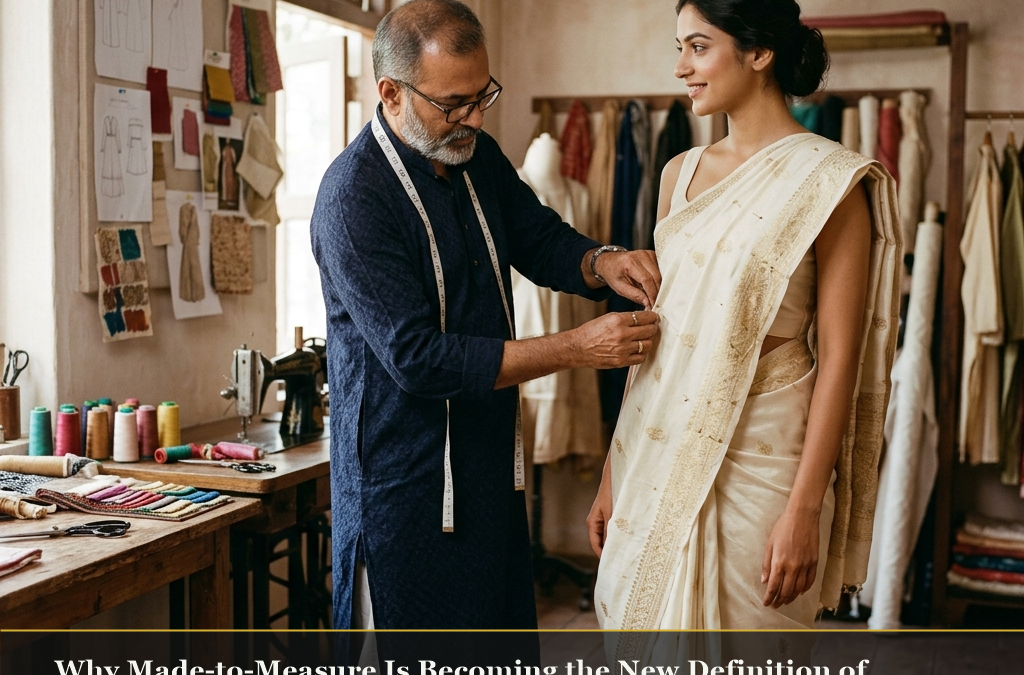
Choosing made-to-measure Indian fashion means entering a realm of intentional design. A genuine custom tailoring experience is a collaborative journey that begins long before the first stitch is sewn. It starts with an intimate consultation inside a quiet, naturally lit design studio specializing in made-to-measure Indian fashion. The designer takes the time to understand the wearer’s lifestyle, style preferences, and aesthetic goals.
Fabric selection is the next critical step in the process. The wearer is introduced to the sensory qualities of handloom textiles, exploring the drape of Chanderi silk, the texture of raw tussar, and the breathability of organic cotton. The choice of material is guided by how the fabric will move with the body.
Following fabric selection, a detailed measurement session is conducted to establish the structural blueprint of the garment. In made-to-measure Indian fashion, this involves capturing more than twenty distinct anatomical markers. The tailor measures the shoulder slope, armhole curve, and torso length to ensure absolute accuracy.
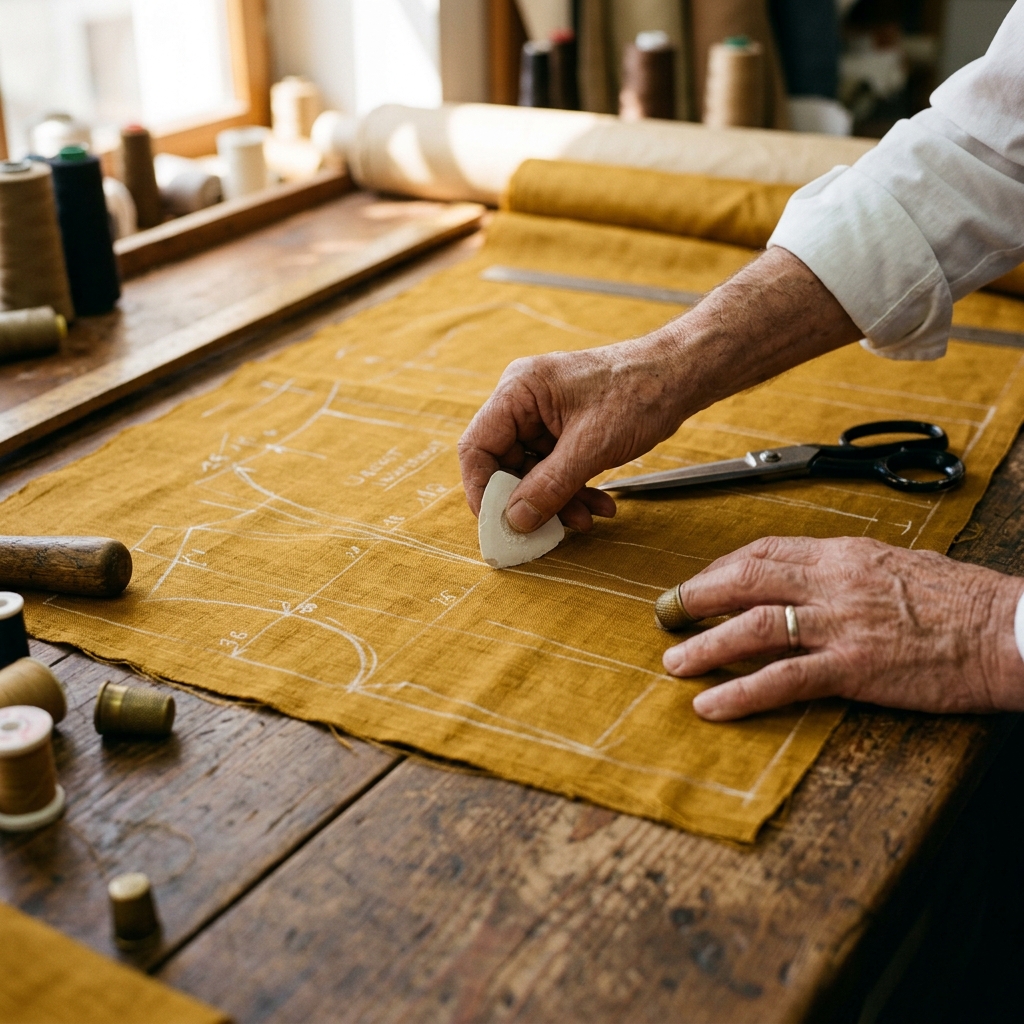
These detailed measurements are translated into a custom paper pattern, which is used to cut the raw fabric. A mock-up garment, or muslin toile, is often created first to test the fit and drape on the body, allowing the tailor to make adjustments before cutting the final luxury textile.
The first fitting session allows the designer to evaluate the balance of the garment. They adjust the darts, refine the collar shape, and ensure the sleeves move freely. This interactive step is essential in made-to-measure Indian fashion to achieve a perfect balance between form and comfort.
Subsequent fittings refine the minor details, such as the placement of hand-finished buttons, the depth of the hem, and the alignment of linings. Each adjustment is made with precision, ensuring the finished piece sits comfortably against the skin and allows for easy movement.
The final turnaround time reflects the slow, deliberate nature of custom craftsmanship. Rather than the immediate gratification of off-the-rack retail, made-to-measure Indian fashion requires patience. The result is a unique garment built to stand the test of time, reflecting genuine care.
This process is a sensory education for the client. Feeling the weight of different silks, observing the subtle difference a centimeter makes in the drape of a shoulder, and understanding the architecture of a sleeve are satisfying experiences that deepen our appreciation for tailoring.
It also fosters a deep mutual respect between the client and the artisan. The master cutter, the pattern maker, and the tailor are recognized as highly skilled craftsmen whose expertise is essential to the garment’s success. This human connection is what sets custom tailoring apart from industrial retail.
Every fitting is an exercise in collaboration and refinement. As the garment takes shape, it is adjusted to the body’s natural stance and movement. This organic development ensures that the final piece is not just structurally sound, but carries the personality and comfort of the wearer.
4. Ateliers vs. Assembly Lines: Why Homegrown Labels Own Customization
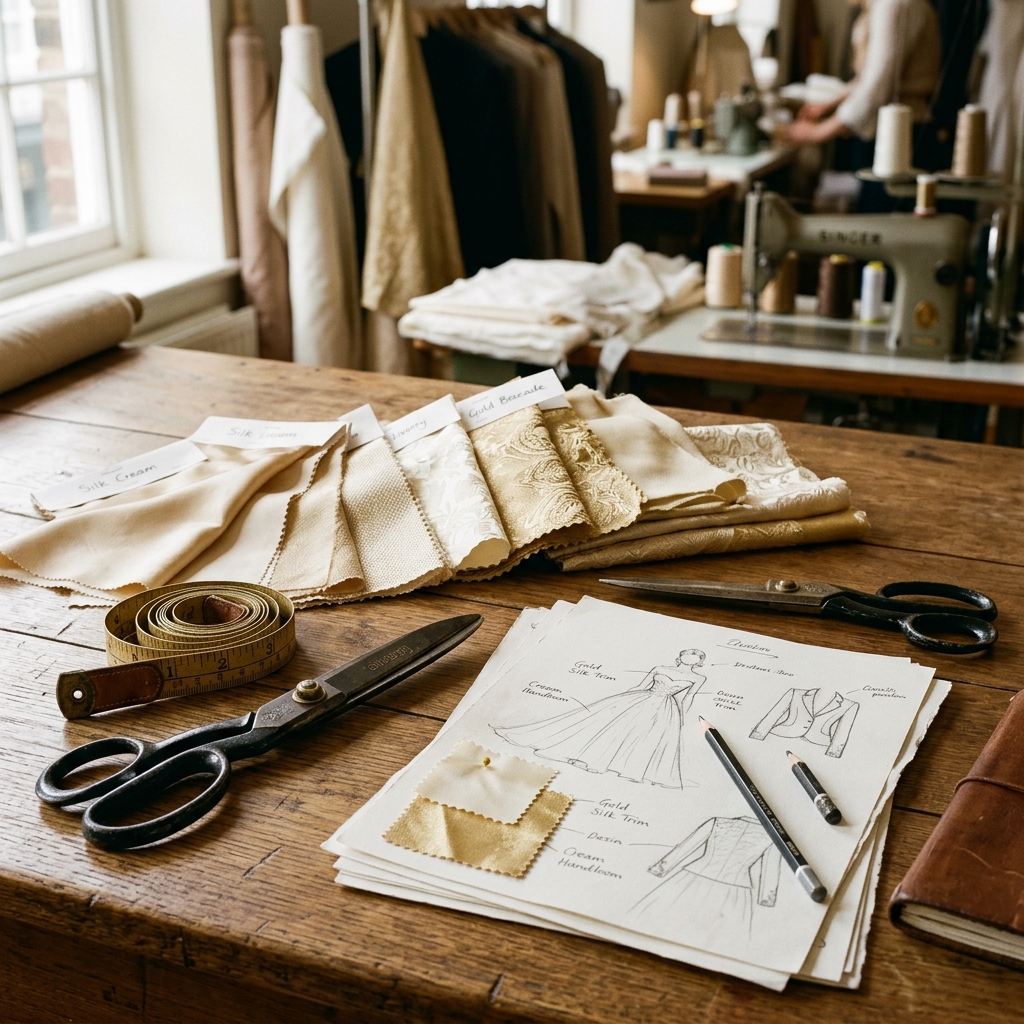
Independent homegrown labels are uniquely positioned to offer personalized fitting experiences due to their scale and design philosophy, allowing custom development in made-to-measure Indian fashion. Unlike mass-market luxury brands that rely on automated assembly lines, local ateliers operate on a slow, artisanal scale. This allows them to focus on custom development.
Mass-produced luxury brands prioritize scalability and high volume, which makes custom adjustments difficult and expensive. Their production pipelines are optimized for standard sizes, leaving little room for individual modifications. Homegrown ateliers, conversely, build customization into their core workflow, celebrating local heritage. This philosophy is key to why meaning-driven luxury Indian wear brands are winning the trust of modern consumers.
This difference highlights why made-to-measure Indian fashion is a natural fit for independent designers. By keeping production local and limited, homegrown ateliers can work closely with traditional tailors and master cutters. This close collaboration ensures that every custom request is handled with individual attention.
Furthermore, homegrown ateliers build direct relationships with handloom weaving clusters. This allows them to develop custom textile weights and weaves for specific clients, offering a level of personalization that global luxury conglomerates cannot match. In the context of made-to-measure Indian fashion, this supports the slow, sustainable ecosystem of hand-crafted textiles.
This localized control also means that the design process remains deeply collaborative and highly responsive. If a client desires specific adjustments to the silhouette, the design team can implement these changes directly on the custom pattern. This degree of flexibility is central to made-to-measure Indian fashion, transforming the garment from a commercial purchase into a deeply personalized piece of wearable art.
By supporting these slow ateliers, buyers contribute to the preservation of local craftsmanship and tailoring expertise. It supports a system where the skills of the master cutter are respected, and the principles of made-to-measure Indian fashion are kept alive. It values human hands over automated assembly lines, explaining why handcrafted Indian clothing is reclaiming its position at the apex of luxury.
Mass luxury labels often rely on outsourced factory production where speed is prioritized over detail. In contrast, a homegrown atelier operates as a sanctuary of slow design. The focus remains on the quality of the sewing, the precision of the cuts, and the longevity of the final product.
This local production model also allows for greater design agility. If a client requests a specific neck shape or a custom sleeve length, the atelier can implement these changes directly on the pattern. This flexibility is impossible within the rigid frameworks of global industrial supply chains.
Additionally, homegrown designers are deeply familiar with the local climate and cultural context. They know which silks breathe best in summer heat and how a drape should sit during traditional movements. This regional intelligence is woven into every custom piece they construct.
5. Personalization as a Commitment to Made-to-Measure Indian Fashion Longevity
There is an inherent link between made-to-measure Indian fashion and wardrobe longevity, mirroring the principles of investment dressing Indian fashion. When a garment is designed and tailored specifically for your body, it creates a deep psychological connection. You are far more likely to cherish, care for, and repair a piece that fits you flawlessly.
Mass-produced clothing is often viewed as disposable. Because it was bought quickly and fits average proportions, it is easily discarded when trends change or the fit degrades. Within made-to-measure Indian fashion, custom garments are viewed as heirlooms, designed to be worn for years and passed down through families.
The longevity of made-to-measure Indian fashion is also supported by structural choices. Custom tailors include generous seam allowances of up to two inches, allowing the garment to be altered as the body changes over time. This makes the piece highly adaptable and durable.
High-quality, natural textiles like silk and handloom cotton also age beautifully, developing a softer texture and subtle character over time. When combined with custom construction, these fabrics ensure the garment remains a staple of your wardrobe for decades, defying trend cycles.
This commitment to longevity is central to the slow fashion movement in the country. According to recent Vogue India’s review on bespoke fashion, prioritizing bespoke fit over volume is key to reducing textile waste. This shift demonstrates how made-to-measure Indian fashion promotes a sustainable lifestyle, aligning with modern values.
Personalized clothing also reduces the energy and material waste associated with returns. Ill-fitting off-the-rack garments are often returned and sent to landfills, whereas custom garments are made to order, ensuring every resource is used efficiently and purposefully.
Ultimately, the longevity of made-to-measure Indian fashion represents a shift from temporary consumption to permanent appreciation. It encourages us to build wardrobes that are structurally sound, personally meaningful, and environmentally responsible. It is a slow, thoughtful commitment to quality over quantity.
When a garment fits you perfectly, it doesn’t sit in your wardrobe. It is worn regularly, adapted to different occasions, and integrated into your daily life. This high utility rate is the ultimate marker of a successful, sustainable clothing investment.
Furthermore, the emotional connection we develop with personalized garments changes our perspective on style. We stop chasing transient trends and start cultivating a signature look built on pieces that flatter our unique proportions. This transition brings clarity and stability to our wardrobes.
This commitment to durability also supports the tailors and weavers who created the garment. It values their labor and ensures that their skills are kept alive through active use, creating a legacy of craft that continues to enrich our culture.
6. A Final Thought
The growing demand for made-to-measure Indian fashion represents a maturing of the luxury market. Consumers are moving away from superficial markers of status and embracing the true luxury of personalization and comfort. They are choosing to invest in pieces that respect their bodies and their values.
This transition is reviving the historical relationship between the weaver, the tailor, and the wearer. It puts the human hand back at the center of the fashion narrative, celebrating the direct connection between craft and individual expression. It makes fashion a personal, respectful encounter.
By choosing custom-fit garments, we are supporting a sustainable future for our textile heritage. In the end, made-to-measure Indian fashion is a celebration of individuality, proof that the most powerful luxury statement is a garment designed specifically for you. It is a slow, beautiful art of dressing.
As we move forward, the brands that thrive will be those that honor the uniqueness of their clients. Customization is not a temporary trend; it is the path forward for a conscious, elegant, and authentic fashion ecosystem that respects both the maker and the wearer.
In this new era, true luxury is found in the absence of compromise. It is felt in the comfort of a tailored armhole, the clean line of a customized drape, and the knowledge that your garment was crafted with respect for your unique self and the heritage of our artisans.
Frequently Asked Questions
What is the difference between bespoke and made-to-measure Indian fashion?
Bespoke clothing involves creating a completely unique pattern from scratch for every client, featuring multiple fittings and custom designs. In made-to-measure Indian fashion, a pre-existing base pattern is modified to match the client’s specific measurements, offering a highly personalized fit with a faster turnaround time.
Why does standardized sizing fail Indian body shapes?
Standardized sizing charts are optimized for Western body shapes and average heights. Indian body proportions often feature different shoulder slopes, bust-to-waist ratios, and heights. Choosing made-to-measure Indian fashion accommodates these unique variations, ensuring the garment sits comfortably and flatters the body naturally.
How long does the made-to-measure Indian fashion process take?
The turnaround time varies depending on the complexity of the design and fabric availability. Typically, a custom tailoring process takes between three to six weeks. This includes the initial measurement session, pattern drafting, fitting appointments, and final hand-finishing details.
Can custom tailored ethnic wear be adjusted if my size changes?
Yes. High-quality made-to-measure Indian fashion garments are designed with generous seam allowances of up to two inches inside the side seams. This structural detail allows the garment to be easily let out or taken in by a professional tailor, ensuring its longevity as your body changes.
How does custom tailoring support sustainable fashion?
Custom tailoring operates on a made-to-order model, which eliminates overproduction and inventory waste. By prioritizing made-to-measure Indian fashion over mass-market trends, it encourages consumers to buy fewer, better pieces that they will wear for years, directly supporting slow and sustainable fashion.
This Article is written by Anahita Shelat, founder and creative head of Anahita Shelat one of the best Hand embroidered Indian Clothing brand.
Leave a Reply